
For much of the modern era, global design often moved in one direction.
Western minimalism dominated interiors. International luxury brands shaped fashion trends. Glass towers redefined city skylines across continents. Globalization encouraged aesthetic uniformity, where modernity frequently became associated with sleek surfaces, neutral palettes, industrial materials, and standardized visual language.
But something significant is beginning to change.
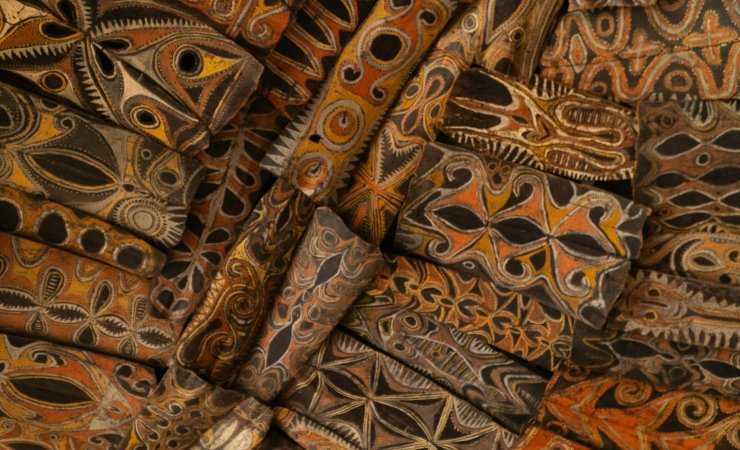
Across fashion, architecture, interiors, luxury, hospitality, and contemporary art, there is a visible global return toward indigenous design, regional craftsmanship, local materials, and culturally rooted aesthetics. From Indian textiles and African craftsmanship to Japanese wabi-sabi philosophy and Latin American artisanal traditions, the design world is increasingly rediscovering the emotional, cultural, and material value of local identity.
And importantly, this movement is no longer being treated as niche, folkloric, or purely traditional.

It is becoming central to the future of global design itself.
This shift reflects a broader cultural realization: in an increasingly digital and globally standardized world, people are craving distinctiveness, texture, heritage, and emotional grounding. The more algorithmic culture becomes, the more valuable local identity appears. In many ways, indigenous design is returning not as nostalgia, but as resistance to sameness. One of the clearest examples is the growing global appreciation for Indian craftsmanship and textiles. Over the last few years, luxury fashion houses and international designers have increasingly engaged with Indian embroidery, weaving traditions, handloom techniques, and artisanal production systems. When Dior staged its pre-fall show in Mumbai in collaboration with Mumbai's Chanakya ateliers, publications such as Vogue's coverage of the Dior Mumbai show and Business of Fashion's analysis of Indian craftsmanship in luxury framed the event not simply as fashion spectacle, but as recognition of India's extraordinary artisanal heritage within global luxury culture.
Importantly, the conversation surrounding indigenous design today is evolving beyond surface-level inspiration. Increasing attention is being paid to questions of authorship, cultural respect, collaboration, and economic inclusion. Consumers and designers alike are becoming more conscious of the difference between cultural appreciation and appropriation.
This shift is visible globally.
Across Africa, contemporary designers, architects, and artists are increasingly blending indigenous materials, craft traditions, and local narratives with modern forms. Publications such as Dezeen's reporting on African architecture and design movements have highlighted how architects across Ghana, Rwanda, Nigeria, and South Africa are creating globally admired work rooted in local climate, materials, and cultural identity rather than imported Western templates.
Similarly, the global fascination with Japanese design philosophy continues to grow far beyond aesthetics alone. Concepts such as wabi-sabi—which embraces imperfection, impermanence, and natural simplicity—have profoundly influenced contemporary interiors, hospitality, fashion, and wellness spaces worldwide. As explored by The New York Times in its analysis of wabi-sabi culture and by Wallpaper* magazine's coverage of Japanese minimalism and craft, global audiences increasingly view Japanese design not merely as visual style, but as a philosophy of living that offers emotional calmness in overstimulated modern environments.
Latin America is experiencing a similar cultural rediscovery. Artisanship, natural materials, handcrafted furniture, indigenous weaving traditions, and locally rooted architecture are increasingly shaping contemporary design conversations across Mexico, Peru, Colombia, and Brazil. Publications like Architectural Digest's exploration of Latin American craftsmanship have noted how younger designers are merging indigenous techniques with modern design language to create work that feels globally contemporary without erasing regional identity.
This movement extends beyond aesthetics into architecture itself.
Around the world, architects are increasingly reconsidering how buildings interact with climate, landscape, culture, and local memory. Indigenous architecture historically evolved through deep environmental understanding, material intelligence, and social functionality. Today, many contemporary architects are revisiting those principles as modern cities confront sustainability challenges, emotional disconnection, and climate anxiety.
This is one reason why materials such as clay, stone, lime plaster, bamboo, reclaimed wood, terracotta, and handwoven textiles are reappearing across hospitality, luxury residences, galleries, and boutique spaces globally. In a world dominated by glass, steel, and digital interfaces, tactile materials feel emotionally grounding.
The return of indigenous design also reflects changing definitions of luxury. For decades, luxury often emphasized perfection, exclusivity, and industrial refinement. Increasingly, however, cultural depth, craftsmanship, traceability, and authenticity are becoming equally important. Handmade irregularities, visible artistry, local narratives, and slow production processes now carry significant cultural and economic value.
The rise of artisanal luxury demonstrates this shift clearly.
Consumers increasingly seek objects and spaces that feel connected to people, place, and process rather than mass production alone. This explains the growing global interest in handwoven textiles, handmade ceramics, indigenous furniture traditions, regional architecture, and craft-led fashion.
What people increasingly desire is not only aesthetic beauty.
They want cultural meaning.
This is particularly important in an era where artificial intelligence and algorithmic systems are accelerating visual homogenization. As AI-generated imagery floods digital spaces, local craftsmanship and indigenous design traditions offer something machines struggle to replicate fully: cultural memory. Indigenous design carries stories embedded within materials, rituals, landscapes, and communities. It reflects centuries of adaptation, symbolism, climate understanding, and collective identity. Unlike trend-driven aesthetics, it often emerges from lived relationships between people and place.
That emotional depth matters enormously in modern culture. And importantly, this revival is not about rejecting modernity. Many contemporary designers are creating hybrid systems where indigenous techniques coexist with technology, sustainability, and contemporary forms. The future of design increasingly appears neither purely traditional nor entirely futuristic.
Instead, it is becoming culturally layered.
This may ultimately become one of the defining creative movements of the next decade. As globalization and AI continue pushing culture toward standardization, local identity may become one of the most valuable creative assets societies possess. Because in a world where everything risks looking globally similar, rootedness becomes differentiation.
The Better Voice Perspective
At The Better Voice, we believe the revival of indigenous design reflects a deeper cultural shift taking place globally: the search for identity, emotional resonance, and human connection in increasingly standardized systems.
For years, globalization rewarded sameness. But the future of design may belong to cultures and creators capable of preserving local memory while engaging globally.
Indigenous design matters not because it represents the past, but because it offers alternative ways of imagining the future—through sustainability, craftsmanship, climate sensitivity, storytelling, and cultural continuity.
As technology accelerates and aesthetics become increasingly algorithmic, local identity may become one of the rarest and most valuable forms of cultural richness.
And perhaps that is why the world is rediscovering indigenous design now.
Not simply as decoration.
But as wisdom.