

For decades, global cultural influence largely flowed through a predictable set of cities. Paris defined fashion. New York shaped media. London drove music and publishing. Los Angeles dominated entertainment. Tokyo represented technological futurism. Cultural power, much like economic power, appeared concentrated in a handful of established global capitals.
Today, however, another city has entered that conversation with extraordinary speed and influence: Seoul.
What makes Seoul's rise particularly fascinating is that it was not built on a single industry. Its influence emerged through the convergence of entertainment, fashion, beauty, technology, design, architecture, and digital culture. K-pop, Korean cinema, skincare, luxury fashion collaborations, streaming platforms, gaming culture, and contemporary design aesthetics collectively transformed Seoul into one of the most influential cultural ecosystems in the world. And increasingly, Seoul's influence extends far beyond entertainment alone.
It is shaping global taste.
The rise of Korean cultural influence—often referred to as Hallyu or the Korean Wave—did not happen accidentally. It was the result of decades of investment, creative infrastructure, digital adaptability, and an unusually sophisticated understanding of how culture functions in the modern economy.
One of the clearest examples is K-pop itself. Groups such as BTS and BLACKPINK evolved far beyond traditional music acts. They became global cultural systems capable of influencing fashion, beauty, social media trends, luxury partnerships, and consumer behavior across continents. According to Bloomberg's reporting on the global economic impact of K-pop and analysis by Financial Times on Korea's soft-power economy, Korean entertainment now contributes significantly to tourism, exports, retail, and international branding.
Luxury fashion recognized this shift quickly. Major houses including Louis Vuitton, Dior, Chanel, and Celine increasingly appointed Korean artists and idols as ambassadors, understanding that Korean cultural influence was shaping younger global audiences at extraordinary scale. Publications such as Business of Fashion and Vogue Business have explored how Korean celebrities became some of the most influential luxury marketing forces in the world.
But Seoul's cultural rise cannot be explained through music alone.
Cinema played an equally transformative role.
The global success of Parasite, directed by Bong Joon-ho, represented a turning point in how Korean storytelling was perceived internationally. When Parasite became the first non-English-language film to win Best Picture at the Academy Awards, it signaled more than artistic recognition. It demonstrated that Korean storytelling could shape mainstream global culture while remaining deeply rooted in local social realities. Publications including The New Yorker and The Atlantic analyzed how Korean cinema succeeded by balancing social critique with global accessibility.
Streaming platforms accelerated this transformation even further. Netflix invested heavily in Korean productions, recognizing both the international demand for Korean content and the broader cultural momentum surrounding Seoul itself. Shows like Squid Game became global phenomena, generating conversations around capitalism, inequality, survival, and digital-age entertainment culture. According to Netflix newsroom announcements on Korean content investments, the company committed billions toward expanding Korean productions as global demand surged.
Importantly, Korean cultural exports succeeded not by imitating Western entertainment models, but by developing distinct creative identities with global accessibility. Korean cinema often combines emotional intensity, visual sophistication, social commentary, and genre experimentation in ways that feel both culturally specific and universally resonant.
That balance matters enormously in today's cultural economy.
Seoul's influence also extends deeply into beauty and design. The global expansion of K-beauty fundamentally reshaped skincare culture by emphasizing preventative care, layering routines, skin health, and aesthetic minimalism. Brands emerging from Seoul transformed not only products, but the philosophy surrounding beauty itself. Publications such as Vogue's analysis of K-beauty's global influence and Business of Fashion's reporting on Korean beauty culture have repeatedly explored how Korean aesthetics influence global consumer expectations around skincare innovation, packaging, and wellness-oriented beauty.
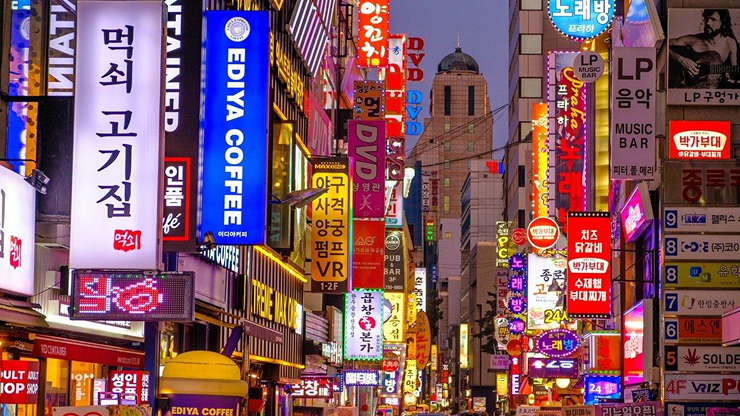
Fashion and street culture further reinforced Seoul's global identity. Districts such as Hongdae, Seongsu-dong, and Gangnam became internationally recognized for blending youth culture, independent fashion, café aesthetics, experimental retail spaces, and highly visual urban design. Seoul's visual culture feels technologically advanced yet emotionally textured—a balance many global cities increasingly struggle to maintain.
This is one reason why Seoul resonates so strongly with younger generations worldwide. The city represents a version of modernity that feels digitally sophisticated without appearing emotionally sterile. Its culture combines technology, aesthetics, craftsmanship, and social energy into a highly recognizable atmosphere.
Architecture and urban design contribute significantly to this identity as well. Projects such as Dongdaemun Design Plaza, designed by Zaha Hadid, symbolized Seoul's ambition to position itself not merely as a commercial center, but as a design-forward global cultural city. Publications like Dezeen and Wallpaper* have examined how Seoul increasingly integrates architecture, retail, design, nightlife, technology, and public space into a cohesive urban identity.
This cohesion is important because modern cultural capitals are no longer defined solely by heritage. They are defined by ecosystems.
Paris still carries historical prestige. New York still dominates finance and media. But Seoul's rise reflects something increasingly relevant in the digital era: cultural power now moves faster, more fluidly, and more globally than ever before. Cities capable of combining entertainment, technology, aesthetics, social media fluency, and emotional storytelling can rapidly shape global culture.
Seoul mastered this convergence unusually well.
There is also a geopolitical dimension to this transformation. South Korea recognized early that culture could function as soft power. Investments in entertainment, digital infrastructure, cultural exports, tourism, and creative industries became part of broader national positioning. According to the Korea Creative Content Agency (KOCCA), Korean cultural exports contribute significantly not only economically, but diplomatically by shaping global perceptions of Korea itself.
In many ways, Seoul demonstrates that modern influence is no longer determined only by military or economic scale.
Culture itself has become infrastructure.
And increasingly, the cities shaping culture shape aspiration.
This is perhaps why Seoul feels so globally significant today. It is not merely exporting music, fashion, or television. It is exporting an atmosphere—a recognizable blend of aesthetics, emotion, discipline, digital sophistication, creativity, and cultural confidence.
The city represents a broader shift in how global influence operates in the 21st century.
Power is no longer only institutional.
It is cultural.
The Better Voice Perspective
At The Better Voice, we believe Seoul's rise reflects one of the most important transformations in modern global culture: the growing power of creative ecosystems.
Cities are no longer competing solely through finance, infrastructure, or political influence. Increasingly, they compete through aesthetics, storytelling, design, entertainment, and emotional resonance. The cities that shape global imagination often shape global aspiration as well.
Seoul succeeded because it understood that culture is not peripheral to economic growth or national identity.
It is central to both.
Its rise demonstrates that modern cultural power emerges not from imitation, but from confidently developing distinctive creative identities that can travel globally without losing local character.
And in an increasingly connected world, that may become one of the most valuable forms of influence any city can possess.