
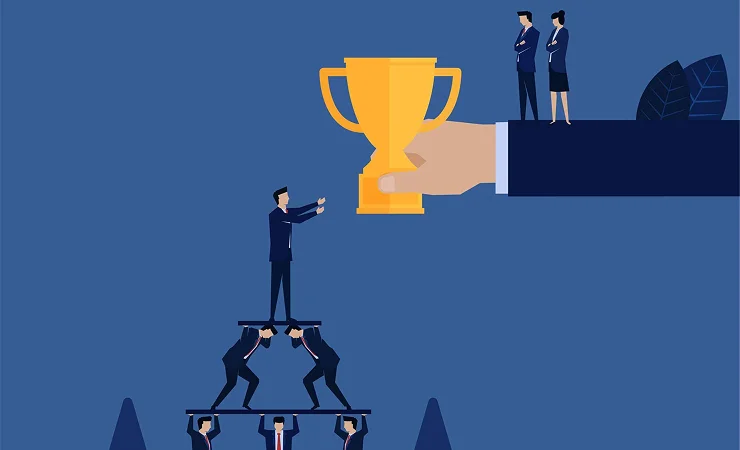
For decades, education followed a relatively predictable structure. Knowledge flowed from institutions to individuals. Universities certified expertise, schools shaped learning pathways, and professional development was largely tied to formal systems. If someone wanted to learn about business, psychology, design, marketing, finance, or leadership, the assumption was simple: enroll in a program, buy a textbook, or attend an institution.
That model is no longer the only center of gravity.
Over the last few years, a parallel education system has quietly emerged across the internet—one powered not by universities, but by creators. Today, millions of people learn daily through YouTube channels, LinkedIn posts, podcasts, newsletters, online communities, cohort-based programs, and independent educators who often have no traditional institutional backing at all. The creator economy, once associated primarily with entertainment and social media influence, is increasingly becoming one of the most important educational infrastructures of the digital age.
This shift is not theoretical. It is already shaping how people build careers, acquire skills, understand industries, and even define expertise itself.
The scale of this transformation is enormous. According to research from Goldman Sachs, the creator economy could approach half a trillion dollars by 2027, driven not only by entertainment content but also by education, community-building, and professional knowledge sharing. Simultaneously, platforms like YouTube, LinkedIn, and Substack have evolved into large-scale learning ecosystems where individuals increasingly seek advice on business, technology, finance, health, leadership, and career development.
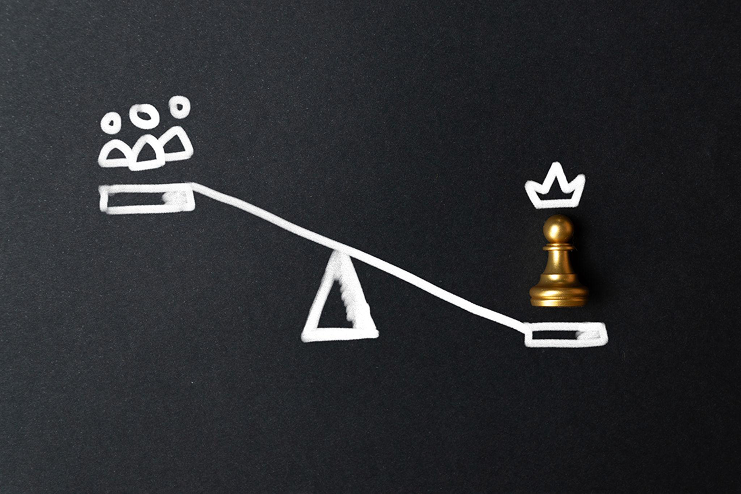
What makes this particularly significant is that creators are not simply distributing information. They are reshaping how knowledge itself is consumed.
Traditional education was designed around structure, hierarchy, and standardization. Creator-led learning operates very differently. It is faster, personality-driven, hyper-accessible, community-oriented, and deeply optimized for digital behaviour. A student no longer needs to wait for a semester-long course to understand branding strategy or AI workflows. They can learn directly from practitioners publishing real-time insights online.
This has fundamentally altered the relationship between expertise and accessibility.
Historically, knowledge was often gatekept by institutions. Today, a marketing strategist on LinkedIn, a finance educator on YouTube, or a productivity creator on TikTok can reach more learners in a single month than many traditional classrooms reach in years. In many cases, these creators are not speaking theoretically—they are documenting live industry changes as they happen.
This is one reason why younger professionals increasingly trust creators alongside institutions. They perceive creators as closer to the market, more current, and often more practical. A university curriculum may take years to adapt to technological disruption. A creator discussing AI tools, digital branding, or industry shifts can respond within hours.
The rise of AI has accelerated this dynamic dramatically.
As industries change faster than traditional educational systems can update, professionals are increasingly turning toward digital creators for continuous learning. Whether it is understanding generative AI, building a personal brand, navigating remote work, learning high-income skills, or adapting to changes in marketing and technology, creators have become real-time interpreters of the modern economy.
In many ways, the creator economy is filling the growing gap between formal education and practical relevance.
This explains the explosion of cohort-based courses, digital academies, creator-led communities, and independent learning ecosystems. Platforms such as Maven, Kajabi, and Circle have enabled creators to transform audiences into educational communities, while newsletters and podcasts increasingly function like ongoing learning platforms rather than media products.
Importantly, this shift is not only happening among younger audiences. Professionals, founders, executives, and even corporations now rely heavily on creator-driven knowledge networks to stay informed. LinkedIn thought leaders influence workplace culture. Podcast hosts shape leadership conversations. YouTube creators explain AI better than many formal institutions currently can.
The creator economy is no longer competing with traditional education solely on accessibility. It is competing on speed, relatability, and cultural relevance.
Yet this transformation also introduces new tensions.
Unlike universities, creators are not always governed by academic standards, peer review, or formal accountability structures. The same systems that democratize learning can also amplify misinformation, oversimplification, and performative expertise. Algorithms often reward confidence over nuance, virality over accuracy, and speed over depth.
This creates a difficult question for the future of education: if attention increasingly determines visibility, how do we preserve intellectual rigor?
The problem is not that creators are teaching. Many provide extraordinary value. In fact, some of the most insightful commentary on business, psychology, technology, and creativity today comes from independent thinkers operating outside institutional systems. The issue is that digital platforms are designed primarily around engagement, not educational quality.
As a result, learning itself is becoming increasingly shaped by the logic of content. Lessons become shorter. Ideas become simplified. Complexity becomes compressed into viral frameworks and quick takeaways. This makes knowledge more accessible, but sometimes less durable.
At the same time, however, traditional institutions are facing their own credibility crisis. Rising tuition costs, outdated curricula, slow adaptation to technological change, and growing skepticism around the return on investment of degrees have pushed many learners toward alternative educational pathways. According to surveys highlighted by publications such as Harvard Business Review and The Atlantic, employers are increasingly prioritizing demonstrable skills and adaptability over credentials alone.
This does not mean universities are disappearing. Rather, it suggests that the monopoly institutions once held over education is weakening.
The future of learning may become hybrid. Universities may continue providing foundational knowledge, research, and institutional credibility, while creators increasingly dominate continuous, real-time, practical learning. One system offers depth and structure; the other offers agility and accessibility.
The most successful learners of the future will likely move fluidly between both worlds.
This is also reshaping the meaning of influence itself. Traditionally, educators, professors, journalists, and institutions occupied the role of knowledge authority. Today, influence is increasingly tied to the ability to explain, synthesize, and communicate ideas effectively online. The creator who can simplify AI, decode business trends, explain psychology, or teach financial literacy in an engaging way often holds immense educational power.
In this environment, communication itself becomes a competitive advantage.
And perhaps that is the most important shift of all.
The creator economy is not simply changing who teaches. It is changing what society values in educators. Expertise alone is no longer enough; visibility, relatability, storytelling, and audience trust now matter just as much. This is why creator-led education feels simultaneously empowering and unsettling. It democratizes access to knowledge while also turning learning into part of the attention economy.
And increasingly, those two systems are becoming impossible to separate.
We believe the rise of creator-led education reflects a deeper transformation in how modern society approaches knowledge itself.
People no longer learn only through institutions. They learn continuously through ecosystems of content, communities, creators, algorithms, and digital conversations. Education is becoming decentralized, personalized, and permanently ongoing.
But this shift also demands greater responsibility from learners. Because in a world where knowledge is abundant, the real challenge is no longer access to information. It is discernment.
The future will belong not simply to those who consume the most content, but to those who can think critically, question intelligently, and distinguish genuine expertise from performative authority.
The creator economy may become one of the defining educational systems of the 21st century.
The real question is whether it can remain educational without becoming purely algorithmic.