
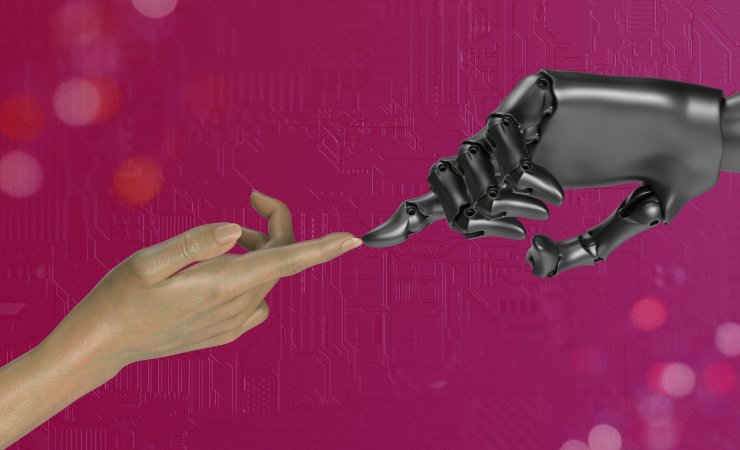
There was a time when taste was discovered slowly.
You found music through a friend, films through a late-night television screening, books through wandering inside bookstores, and fashion through cities, subcultures, magazines, and personal experimentation. Taste was shaped by accidents, conversations, environments, and curiosity. It carried a sense of unpredictability.
Today, much of that process has become automated.
Streaming platforms recommend what to watch before we search. Algorithms decide which songs appear in our playlists. Social media platforms shape aesthetic trends at a global scale within days. Fashion, interiors, travel destinations, restaurants, even personal opinions increasingly move through recommendation systems designed to predict preference before preference fully forms.
This has created a strange cultural moment: we have more access to content, inspiration, and products than any generation in history, yet culture itself is beginning to feel increasingly similar.
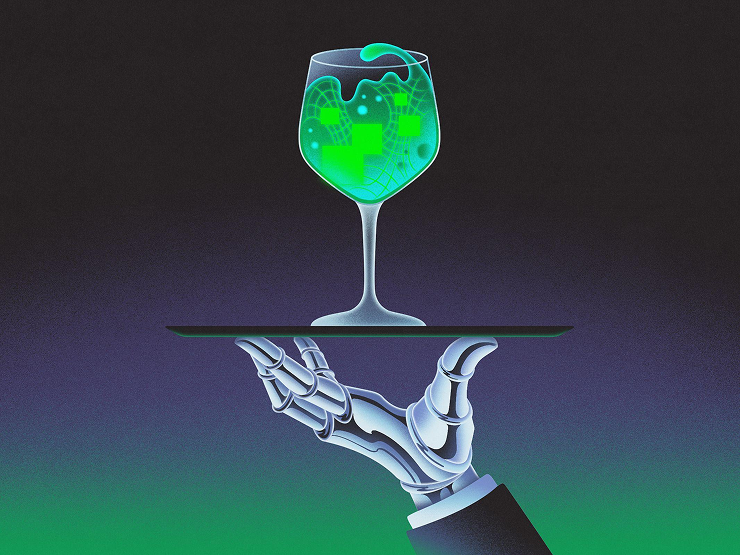
The modern internet promised personalization. What it may actually be producing is convergence.
This is the paradox of algorithmic taste.
At first glance, algorithms appear liberating. Platforms like Spotify, Netflix, TikTok, and Instagram offer endless personalization, carefully curating recommendations based on behaviour, engagement, and previous consumption patterns. The experience feels intuitive, efficient, and tailored. In many ways, it is.
But recommendation systems are not designed primarily to deepen human taste. They are designed to maximize engagement.
And engagement rewards familiarity.
This changes culture in subtle but profound ways. Algorithms tend to push what performs well, what retains attention, and what resembles previous successful behaviour. Over time, discovery becomes increasingly optimized around predictability. The result is a feedback loop where people are repeatedly exposed to variations of the same aesthetics, sounds, opinions, and cultural signals.
Taste becomes less exploratory and more reinforced.
This is visible everywhere. Fashion trends now move globally at unprecedented speed, often collapsing distinct regional aesthetics into one universal visual language. Restaurants increasingly design interiors for social media visibility. Travel destinations become “viral” before they become personally meaningful. Music platforms generate playlists that blend seamlessly into one another, creating what critics increasingly describe as “algorithmic mood music”—pleasant, frictionless, but rarely surprising.
Even individuality itself is beginning to feel curated.
The irony is that hyper-personalization often produces sameness. Millions of people believe they are expressing unique taste while consuming remarkably similar content streams. The “clean girl” aesthetic, quiet luxury, neutral-toned interiors, productivity culture, wellness routines, and certain forms of minimalism all spread globally with astonishing uniformity through algorithmic amplification.
This is not because people consciously imitate each other. It is because digital systems increasingly shape what becomes visible in the first place.
The consequences extend beyond fashion or entertainment. Taste has always played an important role in identity formation. The music people listened to, the books they read, the places they visited, and the clothes they wore helped construct a sense of self. Cultural discovery was not only about consumption; it was about becoming.
In an algorithmic environment, however, identity risks becoming increasingly reactive rather than intentional.
People are subtly guided toward preferences rather than discovering them independently. The distinction may appear small, but culturally it is enormous. One process expands curiosity; the other narrows it through optimization.
This is particularly relevant for younger generations, whose cultural lives are deeply intertwined with recommendation systems. Entire aesthetics now emerge and disappear within weeks. Virality compresses cultural cycles. Trends no longer evolve gradually through communities and subcultures; they explode globally through platforms designed to reward acceleration.
As a result, culture itself can begin to feel temporary, flattened, and disposable.
Interestingly, this has created a growing counter-movement. Across fashion, music, design, publishing, and travel, there is renewed interest in slower, more intentional forms of discovery. Vinyl records continue to grow in popularity despite streaming dominance. Independent bookstores are experiencing renewed cultural relevance. Film photography, niche magazines, local cafés, handcrafted design, and analogue experiences are attracting younger audiences seeking something less optimized and more human.
What people increasingly crave is not simply quality, but texture.
They want experiences that feel discovered rather than delivered.
This helps explain the rise of what many now describe as “taste communities” rather than mass culture. As algorithms make mainstream culture more homogenized, individuals increasingly search for smaller, more curated spaces where identity feels less engineered. Private membership clubs, independent newsletters, niche cultural platforms, intimate fashion labels, and community-driven creative spaces are all benefiting from this shift.
In many ways, the future of taste may become defined by intentional resistance to algorithmic predictability.
Even luxury itself is adapting. The rise of quiet luxury, artisanal craftsmanship, found objects, vintage fashion, and slower consumption reflects a growing desire for authenticity in an environment saturated with mass visibility. Luxury increasingly signals discernment rather than excess. The most valuable cultural currency is no longer simply owning expensive things—it is demonstrating originality in a world optimized for sameness.
Artificial intelligence is likely to intensify these tensions. AI-generated music, AI-curated shopping, AI-assisted styling, and predictive recommendation engines are becoming increasingly sophisticated. Soon, algorithms may know consumer preferences before consumers consciously articulate them themselves.
This raises uncomfortable questions.
If machines increasingly shape cultural discovery, what happens to spontaneity? If every preference is anticipated, what happens to surprise? And if taste becomes fully data-driven, can originality survive at scale?
None of this means algorithms are inherently harmful. Digital platforms have democratized access to culture in extraordinary ways. Independent artists can now reach global audiences without traditional gatekeepers. Consumers can explore cuisines, music, fashion, and ideas from around the world instantly. Recommendation systems can introduce people to creators they might never have encountered otherwise.
The issue is not access.
It is dependence.
Because when convenience becomes the dominant logic of cultural discovery, efficiency can slowly replace curiosity.
And culture without curiosity eventually becomes repetition.
We believe the future of taste will depend on humanity’s ability to remain intentional inside increasingly predictive systems.
Algorithms may optimize discovery, but they cannot fully replace instinct, experimentation, emotional connection, or cultural depth. The challenge for the modern individual is not to reject technology, but to prevent technology from narrowing the range of human curiosity.
The future of taste may ultimately belong to those who still know how to discover things slowly.
Because in an algorithmic world where everyone is being guided toward similar choices, true taste may become less about consumption—and more about conscious deviation.