
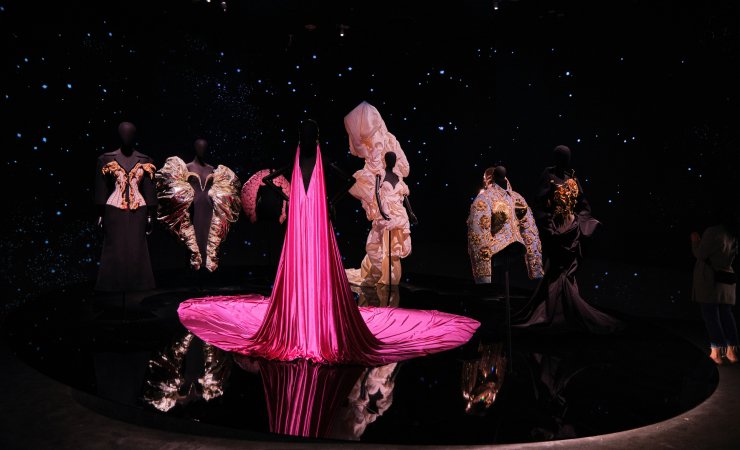
There was a time when the Met Gala was simply a glamorous fundraiser for the Costume Institute at the Metropolitan Museum of Art. It belonged primarily to the worlds of fashion, cinema, and high society—a carefully curated evening where designers dressed celebrities, photographers documented the spectacle, and luxury magazines decided which looks would define the next morning’s headlines.
That version of the Met Gala still exists, but it is no longer the full story.
Today, the Met Gala operates less like a fashion event and more like a global cultural infrastructure. It has become a stage where influence, relevance, luxury, celebrity, media, internet culture, and corporate power converge into a single, hyper-visible moment. Fashion is still the language of the event, but power is increasingly the subject.
The shift reflects a much larger transformation happening across culture itself. In the past, luxury and influence were often tied to exclusivity. Visibility was controlled by magazines, television networks, and elite institutions. But the digital age fundamentally changed the mechanics of relevance. Influence is now measured in impressions, virality, online conversation, meme circulation, and algorithmic reach. The Met Gala evolved accordingly.
It is no coincidence that some of the most discussed moments from recent Met Galas were not necessarily the most elegant. They were the most culturally disruptive. A look no longer succeeds simply because it is beautiful. It succeeds because it becomes part of the internet’s emotional and conversational economy. Fashion has shifted from aesthetic presentation to narrative performance.
This is why the guest list itself has changed so dramatically over the last decade.
The Met Gala once revolved around Hollywood actors, supermodels, and fashion royalty. Today, creators, athletes, musicians, tech personalities, influencers, K-pop stars, and digital celebrities occupy the same carpet. To traditionalists, this sometimes feels like dilution. But culturally, it reflects a more important truth: the hierarchy of influence has changed.
Attention is now decentralized.
A creator with millions of engaged followers may possess more cultural influence than a traditional celebrity with decades of prestige but declining digital relevance. The Met Gala understands this perfectly. Its evolution mirrors the broader shift from institutional fame to participatory fame.
This is also why luxury brands invest so heavily in the event. The Met Gala is no longer merely about dressing celebrities—it is about positioning within culture itself. Every appearance is strategic. A look is designed not only for photographers, but for TikTok clips, Instagram reposts, meme pages, YouTube commentary, fashion breakdowns, and algorithmic amplification across dozens of platforms.
The red carpet has effectively become a global marketing ecosystem.
Fashion houses are no longer competing solely on craftsmanship or exclusivity. They are competing for cultural conversation. The value of a Met Gala moment today lies not just in who wore it, but in how long the internet continues discussing it afterward.
This is where the event becomes particularly fascinating. What we are witnessing is the transformation of fashion into a form of media architecture.
A dress is no longer simply a dress. It is:
The line between fashion, entertainment, and marketing has become increasingly difficult to separate.
And yet, despite this hyper-commercialization, people remain deeply invested in the Met Gala. Millions watch, analyze, criticize, and participate in the discourse around an event they will never attend. That obsession says something important about modern culture.
The Met Gala has become aspirational theatre.
It allows audiences to engage with fantasy, luxury, status, and identity in real time. Social media transformed the event from an elite private gathering into a globally consumed cultural spectacle. Viewers are no longer passive observers; they are active participants in determining which moments matter. Public reaction can now shape a celebrity’s relevance more quickly than traditional media ever could.
This dynamic has changed celebrity behaviour itself. Red carpet appearances are increasingly engineered for visibility rather than timelessness. Outfits are designed to provoke reaction, dominate timelines, and survive the velocity of internet culture. In many ways, the modern red carpet operates according to the same logic as digital content: if it does not generate engagement, it disappears instantly.
That reality has fundamentally altered glamour.
Classic Hollywood glamour was built on distance and mystique. The modern Met Gala operates on immediacy and saturation. Every angle is photographed, every reaction is dissected, every appearance becomes instantly available to millions of people within seconds. The result is a strange paradox: the event feels more accessible than ever, yet the fantasy surrounding it has grown even larger.
This tension between accessibility and exclusivity is precisely what gives the Met Gala its power.
It is not simply showcasing fashion. It is showcasing who currently holds cultural influence in a fragmented world.
And increasingly, cultural influence itself has become one of the most valuable forms of power. Political leaders seek it. Luxury brands monetize it. Corporations engineer it. Celebrities depend on it. Algorithms amplify it.
The Met Gala sits at the center of that ecosystem.
But perhaps the most revealing aspect of the event is what it says about the future of status itself. Traditional status symbols—wealth, titles, ownership—still matter, but they are no longer sufficient on their own. Modern influence requires visibility, narrative control, and cultural participation. Relevance has become performative.
This explains why the Met Gala feels simultaneously artistic and strategic, authentic and manufactured, glamorous and algorithmic. It embodies the contradictions of modern culture.
It is easy to criticize the spectacle. Many do. But dismissing the Met Gala as superficial misses the point entirely. The event matters precisely because it reflects where culture is heading. It reveals how identity, fame, luxury, and media now function in an attention economy.
Fashion may still be the surface.
But underneath it lies something much larger: a battle for cultural visibility.
We believe the Met Gala’s evolution tells a much bigger story than fashion alone.
It reveals how modern power increasingly operates through culture rather than institutions. Influence today is not just political or financial—it is aesthetic, digital, and emotional. The people and brands that shape conversations often hold more cultural relevance than those who simply hold authority.
The Met Gala understands this reality better than most global events.
That is why it continues to dominate public imagination. Not because people are obsessed with clothes, but because they are watching the mechanics of modern influence unfold in real time.
In many ways, the Met Gala is no longer a fashion event.
It is a mirror reflecting what modern society values, rewards, and pays attention to.
And perhaps that is why the world keeps watching.