
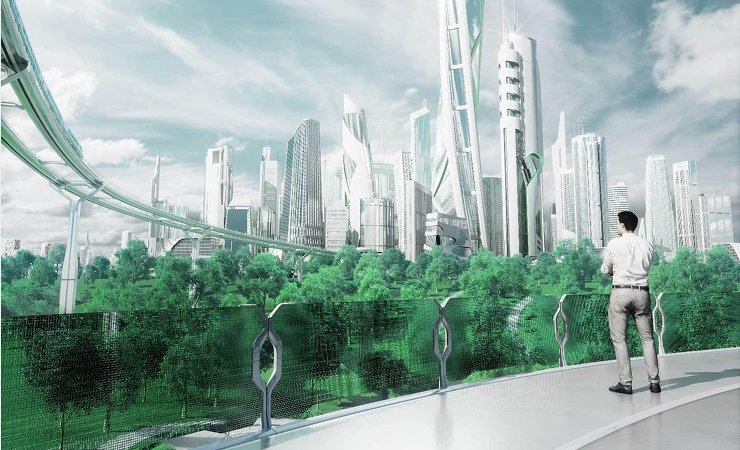
For too long, sustainability has been visually reduced to forests, oceans, wind turbines, solar panels, and recycling symbols.
These images matter. But they do not tell the full story.
Sustainability is not only about protecting the planet from people. It is also about protecting people from systems that have become unsustainable — unhealthy cities, exhausting work cultures, polluted environments, fragile supply chains, unaffordable living, climate anxiety, food insecurity, and social inequality.
The next phase of sustainability must be human-centred.
Because a future cannot be called sustainable if human beings are physically, mentally, socially, and economically exhausted inside it.
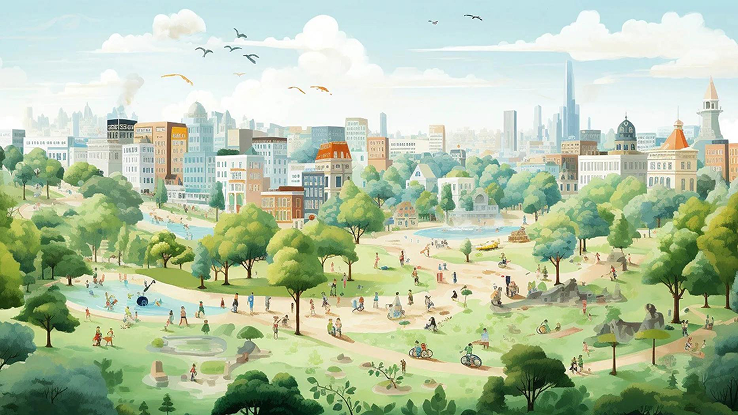
This is where the sustainability conversation needs to mature. Environmental sustainability, social equity, and economic resilience cannot be treated as separate issues. They are connected. A polluted city affects public health. A heat-exposed workplace affects productivity. A fragile food system affects social stability. A company that burns out its employees while publishing a sustainability report has misunderstood the meaning of the word.
Sustainability must become more than a green promise. It must become a better way of organizing life.
The World Health Organization describes climate change as a fundamental threat to human health, affecting the physical environment as well as social, economic, and health systems. This is a powerful reminder that climate is not only about natural systems; it is also about human systems.
That framing is important because it brings sustainability closer to people.
Climate is not only about melting ice or rising seas. It is about children breathing polluted air. It is about elderly people facing dangerous heat. It is about workers exposed to extreme conditions. It is about farmers dealing with unpredictable rainfall. It is about families facing higher food prices. It is about anxiety, displacement, and uncertainty.
A truly sustainable future must also rethink work.
The modern workplace often celebrates speed, ambition, productivity, and constant availability. But if people are exhausted, disconnected, and burned out, can that system really be called sustainable? Human energy is also a resource. Leadership that ignores burnout while discussing sustainability is only seeing half the picture.
Deloitte’s 2026 Global Human Capital Trends report highlights how leaders are facing major tipping points in the way organizations manage people, technology, work, and long-term value. Its work around human sustainability reinforces the idea that business performance cannot be separated from people’s well-being, skills, trust, and capacity to adapt.
Companies must begin to connect environmental responsibility with human responsibility. A better organization is not one that simply reduces emissions. It is one that also builds healthier cultures, fairer systems, and more resilient people.
Cities are another major part of this conversation.
A sustainable city is not just one with green buildings. It is one where people can breathe clean air, access public transport, find shade, walk safely, live affordably, and feel socially connected. A city that looks modern but is unlivable in extreme heat is not sustainable. A city with luxury towers but poor public infrastructure is not sustainable. A city that grows without considering water, waste, mobility, and health is not sustainable.
Sustainability must also become more accessible.
For many people, sustainable choices are still too expensive, inconvenient, or confusing. Ethical fashion often costs more. Healthy food can be unaffordable. Public transport may be unreliable. Cleaner products may not be easily available. If sustainability becomes a lifestyle only for the privileged, it will fail as a global movement.
People should not have to be wealthy to live responsibly.
This is why the future of sustainability must move beyond guilt. Guilt may create awareness, but it rarely creates lasting change. Better systems do.
People change when better choices become easier, more affordable, more attractive, and more culturally normal. A society that wants sustainable behaviour must design for it — through policy, infrastructure, pricing, education, and storytelling.
This is where Better Voice can contribute meaningfully. The platform does not need to treat sustainability as a technical subject alone. It can treat it as a human subject. It can ask how we build better businesses, better cities, better lifestyles, better food systems, better work cultures, and better definitions of progress.
The future of sustainability is not only green. It is practical. It is emotional. It is social. It is economic. It is deeply human.
Sustainability should not be reduced to a colour, a campaign, or a compliance document.
The better sustainability conversation asks a larger question: are we building a world in which life can actually thrive?
The next great sustainability leaders will not only protect forests, oceans, and carbon budgets. They will protect the human future — how we live, work, eat, build, breathe, and belong.